Showing posts with label Navy. Show all posts

Saturday, 19 August 2023

U-Boat Commander Oskar Kusch: Anatomy of a Nazi-Era Betrayal and Judicial Murder - Eric C. Rust

This review has been submitted to Iron Cross Magazine

Title: U-Boat Commander Oskar Kusch: Anatomy of a Nazi-Era Betrayal and Judicial Murder
Author: Eric C. Rust
ISBN: 978-1-68247-514-0
Publisher: Naval Institute Press
Year: 2020
Hardcover
Pages: 340
Photos/Maps: 25/0 

Eric Rust’s “U-Boat Commander Oskar Kusch: Anatomy of a Nazi-Era Betrayal and Judicial Murder" offers a meticulous and deeply researched examination of a harrowing chapter in history. Anchored in the Atlantic Theatre of Operations, this book delves into the life, trial, and ultimate fate of Oskar Kusch, a U-Boat commander during the Nazi era.

At its core, the book presents a riveting narrative that unveils the complex layers of Kusch's life and the intricate web of political, military, and moral forces that surrounded him. Through extensive archival research and firsthand accounts, Rust paints a vivid portrait of Kusch as a multifaceted individual – a skilled naval officer and a proud, strong-willed German, grappling with the moral dilemma of service to his country and fellow sailors and the increasingly obvious amoral activities of a regime notorious for its crimes against humanity.

The heart of the book lies in its exploration of the betrayal and subsequent judicial proceedings that ultimately led to Kusch's execution. Rust meticulously dissects the events leading up to Kusch's arrest, shedding light on the motivations of those who turned against him. The author masterfully navigates through a labyrinth of political intrigue, personal vendettas, and ideological conflicts, showcasing the complexity of Kusch's downfall.

The narrative is elevated by Rust's impeccable attention to detail and ability to present historical facts in a compelling and engaging manner. Readers are immersed in the courtroom drama as Kusch faces a trial riddled with bias, manipulation, and legal irregularities. The author's portrayal of the courtroom dynamics evokes a sense of urgency and tension, making it clear that justice was elusive in an era marked by systemic prejudice.

Furthermore, the book raises thought-provoking questions about culpability, morality, and the choices individuals make in the face of authoritarian regimes. Through Kusch's story, Rust prompts readers to contemplate the blurred lines between personal responsibility and the pressures of conformity in a morally compromised environment. This moral labyrinth being further exacerbated by the stresses of war and the demands of defending home and kinsmen.

However, while the book's focus on Kusch's personal journey is compelling, some readers may find themselves yearning for a broader contextualization of the Nazi era and its atrocities. Although Kusch's story is undoubtedly captivating, a more comprehensive exploration of the larger historical landscape could enhance readers' understanding of the events and decisions that shaped his life and fate.

In conclusion, "U-Boat Commander Oskar Kusch: Anatomy of a Nazi-Era Betrayal and Judicial Murder" is an enthralling, tragic and enlightening read that meticulously examines the life, trial, and execution of Oskar Kusch. Rust delivers a compelling narrative that captures the complexities of Kusch's predicament and the moral dilemmas he faced. This book stands as a testament to the power of historical investigation in unearthing hidden truths and shedding light on the darker corners of humanity and its tangled history.


Wednesday, 16 August 2023

General Naval Tactics: Theory and Practice - Dr Milan Vego

 This review has been submitted to The Australian Naval Institute

Title: General Naval Tactics: Theory and Practice
Author: Milan Vego
ISBN: 978-1-68247-541-6
Publisher: Naval Institute Press
Year: 2020
Hardcover
Pages: 438
Photos/Maps: 0/4 

"General Naval Tactics: Theory and Practice" by Milan Vego is a comprehensive and insightful exploration of naval warfare strategies, spanning from historical contexts to contemporary applications. The book serves as a valuable resource for military professionals, historians, and enthusiasts interested in understanding the intricacies of naval tactics.

Vego, a distinguished naval strategist and scholar, meticulously delves into the evolution of naval tactics over time, tracing their origins from historical to modern warfare. The author masterfully weaves together historical accounts, theoretical frameworks, and real-world case studies to provide a comprehensive overview of naval tactics. By dissecting pivotal engagements like the Battle of Jutland, Battle of Leyte Gulf, the submarine campaign of WW2, the Battle of Jutland and the Falklands War, Vego highlights the importance of maneuvering, communication, and adaptability in naval warfare.

One of the book's key strengths lies in its systematic breakdown of various tactical elements. Vego introduces readers to essential concepts such as formation strategies, fleet coordination, and the role of technology in shaping naval battles. He skillfully analyzes the advantages and limitations of different tactical approaches, enabling readers to grasp the underlying principles that govern successful naval operations.

The book also devotes considerable attention to the influence of technology on naval tactics. Vego navigates through the advancements in naval weaponry, communication systems, and intelligence gathering, illustrating how these developments have revolutionized the way navies plan and execute their strategies. By exploring the impact of technologies like submarines, aircraft carriers, and missile systems, the author underscores the need for constant adaptation and innovation in naval tactics.

Vego's work stands out for its balanced perspective on both offensive and defensive strategies. The book underscores the significance of defensive tactics in naval warfare, challenging the conventional emphasis on offensive maneuvers. Through thought-provoking analyses of historical battles where defensive tactics played a pivotal role, Vego encourages readers to reevaluate their understanding of naval warfare dynamics.

Furthermore, the book does an excellent job of contextualizing naval tactics within the broader geopolitical landscape. Vego acknowledges the interconnectedness of naval power with political, economic, and strategic factors. This multidimensional approach enriches the reader's understanding of why certain tactics were employed and how they influenced the outcome of conflicts.

Be forewarned however, the book demands careful attention due to its comprehensive analysis and scholarly approach, making it more suitable for readers with a genuine interest in naval history and strategy.

In conclusion, Milan Vego's "General Naval Tactics: Theory and Practice" is a tour de force in the realm of naval warfare literature. Its meticulous exploration of historical contexts, theoretical frameworks, and technological influences offers a comprehensive and insightful perspective on naval tactics. By emphasizing the importance of adaptability, communication, and a balanced approach to offense and defense, Vego equips readers with a deeper understanding of the intricacies of naval warfare. This book undoubtedly cements its place as an essential reference for anyone seeking to grasp the complexities of naval tactics from both a historical and contemporary standpoint.

Tuesday, 8 December 2020

I Will Run Wild: The Pacific War from Pearl Harbour to Midway - Thomas McKelvey Cleaver

This review has been submitted to the RCAF Journal.


Title: I Will Run Wild: The Pacific War from Pearl Harbour to Midway
Author: Thomas McKelvey Cleaver
ISBN: 978-1-4728-4133-9
Publisher: Osprey Publishing
Year: 2020
Hardcover
Pages: 320
Photos/Maps: 68/5

The title of this book is drawn from the Commander of the Japanese Navy, Adm Yamamoto’s, comment when advised that war with the United States was inevitable: “For the first six months I will run wild. After that I can promise nothing”. Indeed the Japanese did, repeatedly defeating the Far East forces of the UK, Holland, the Commonwealth and the US. Cleaver’s is a fastidiously researched account of those months; with a particular emphasis upon the US experience. 

Conventional wisdom suggests that this period was one of predominant success for the forces of Imperial Japan; however, as the author demonstrates, the angel of fortune flies on wings made up of a combination of opportunity, competency and luck. As Cleaver’s narrative unfolds, repeated examples are presented where this assertion is proven: 

  1.    The Japanese attack on Pearl Harbour crippling the US Pacific Fleet while missing both its carriers as well as the maintenance and fuel storage reserves of the harbour;
  2.       The Japanese codes (that had been broken by the US in early 1942) being changed on 27 May, 1942; seven days before the attack on Midway but too late to prevent the US from knowing the order of battle and the anticipated attack date;
  3.       The US relief fleet for the garrison at Wake Island (under attack by land and sea forces of Japan) being turned back 24 hrs before their anticipated engagement with the Japanese (who were not aware of their presence and were not at all prepared for a sea engagement); and
  4.       A Japanese Zero ditched during an attack on the Aleutian Islands being found completely by chance by a lost Catalina , intact, because the pilots who had been escorting the crippled aircraft did not want to destroy it from the air (despite standing orders to do so) for fear of possibly injuring their friend and fellow pilot. Up to this point the US had not been able to capture a Zero; the Japanese considered it a loss no less serious than the Battle of Midway itself. 

As with his other books, Cleaver draws heavily upon first-hand accounts from a myriad of sources and ranks, adding a poignancy to his narrative and a very human face to the fighting. His style skillfully captures the breadth of the geographic canvas that was the Pacific Theatre of Operation; concurrently presenting it in a style accessible to both the avid historian and the casual reader. 

An eminently comprehensible and informative work that presents the reader with all of the hubris, drama and humanity from a myriad of perspectives. A recommended addition to those seeking a deeper appreciation of the challenges of the Pacific War.

Thursday, 25 June 2020

The World of the Battleship - Edited by Bruce Taylor

This review has been submitted to Military History Online. 

Title: The World of the Battleship
Author: Edited by Bruce Taylor
ISBN: 978-1-84832-178-6
Publisher: Seaforth Publishing
Year: 2018
Hardcover
Pages: 440
Photos: 100’s

The Battleship was, for decades, a symbol of beauty and raw power; epitomizing the authority of the State for which it sailed. Despite the fact that advances in technology has heralded the close of the Battleship era, it remains for many the quintessential example of the height of tangible State supremacy and influence. The World of the Battleship is a culmination of hundreds of hours of research and coordination to bring together a history of specific vessels spanning the period of 1882-1992 and twenty-one different navies. 

Each section of the book is drafted by a naval historian of the particular navy or region who focuses upon one ship that best represents the cream of that force. Replete with rare and fascinating photographs, the narrative describes the history, operational life and passing of these warships. The stories are presented in a thoughtful and engaging manner; focussing more upon the life of the ship and the crews experiences as opposed to exclusively the technical elements of ship design. Any engineering information is presented to provide context and background, rather than be the focus of the narrative. 

During the period covered by this book, Battleships were used by governments as a visible extension of their power and thus were an overt political, diplomatic as well as military tool. As such, the authors have incorporated into their studies, examples of the influence wielded and the perilous path the national governments trod as they tried to balance the enormous cost versus benefits of these ships. 

Attention is also paid the lives and interactions of the crews. Given that many of these ships had crew compliments in excess of a thousand crewmen, discipline, ethnicity, political machinations and professionalism (amongst others) all played very significant roles in the moral, effectiveness and confidence of these crews and ships. The authors draw upon examples to illustrate how these crews and their ships reflected the strengths and weaknesses of the States themselves. Often times, naval officers represented the cream of society and the lower decker’s those from ‘lower economic’ element’s. These communities were interdependent as the complexity of the ships demanded absolute focus and attention. Poor leadership, excessive discipline or even the quality of the food all had far greater impacts in the closed world of the ship that they would elsewhere. Instances of mutiny are addressed and discussed, as are catastrophic technical failures; each representing still relevant lessons to the modern reader. 

The community and comradeship of the crews on board these ships is emphasized as the true indicator of the strength of the Battleship. This loyalty served as the effective foundation of the ship. Ultimately the ship was a tool, but the care and attention needed for it to perform effectively and the common danger and hardship experienced, required a well-trained and motivated crew. 

This is an excellent book. It is of the highest quality in terms of publication and research. Each author presents a comprehensive bibliography about the national navy discussed, at the end of each section. It is a worthwhile addition to anyone’s library. 

Sunday, 31 May 2020

Red Star Over The Pacific 2nd Edition: China's Rise and the Challenge to U.S. Maritime Strategy - Toshi Yoshihara and James R Holmes

This review has been submitted to Proceedings for consideration. 

Title: Red Star Over The Pacific 2nd Edition: China's Rise and the Challenge to US Maritime Strategy
Author: Toshi Yoshihara and James R Holmes
ISBN: 978-1-682-47218-7
Publisher: Naval Institute Press
Year: 2018
Hardcover
Pages: 366
Photos/Maps: 0/5

The world has watched as, over the last 25 years, China’s naval strength and vision has grown from a coastal to a blue water perspective. Slowly, inexorably, China has undertaken a series of concurrent activities that has seen the extension of the PLAN’s technological capability (via international purchase and domestic development), marked improvement in personnel training and professionalism and an expansion of doctrine in keeping with this broadening of proficiency. Yoshihara and Holmes have expertly summarized these developments in this work. 

The authors have divided the book into a series of defined chapters that serve to shed light on particular aspects of the Chinese historical, doctrinal and operational approach to maritime strategy. Presented in a lucid and accessible manner, each expands upon the knowledge presented in the former to build a comprehensive and well-rounded picture of not only the tangible changes occurring in the region but the psychological and historical underpinnings of these efforts. 

Undertaking an extensive review of Chinese activities and looking in parallel at another nation state that made a concerted effort to challenge the naval status quo (pre-WW1 Germany), the authors have made a very convincing argument that China is following the tenants of Mahan’s “production, distribution and consumption” philosophy as the foundation of their strategic, operational and tactical thinking (a ‘sea denial’ approach). Additionally, and uniquely, they are also incorporating not only Corbett (another renowned Western naval thinker) but also the uniquely Eastern writings of Mao (and his ‘active defence’ approach) and Sun Tzu into their doctrinal development. As presented in the narrative, this provides them with a very broad spectrum of options when looking to expand their influence towards a blue water capability; all the while recognizing what their limitations are and endeavouring to use them in support of their strengths. 

Incorporated into the writers analysis, are primary source material from key military and political figures within the Chinese media, military and leadership. Using this basis, they outline the flexible and developing nature of naval doctrine and capability, national expectations and the vision the Chinese hold vis-à-vis their place within the international community. This analysis is presented opposite a similar look at US national and naval policy for the region; the dichotomy between them is sobering.

Rounding off the narrative, the authors present the readers with a series of options and recommendations regarding the influences that drive the way forward for the Chinese. These suggestions present cogent, balanced and insightful options and opportunities that, given their past actions, may very well foretell the limitations and parameters within which the Chinese may be forced to operate. They also paint a nuanced view of the Chinese strategic and operational options; dispelling some of the Western prejudiced notions surrounding the inevitability of Chinese regional hegemony.

Opposite this, the authors also do the same for the US and her regional Allies in developing strategies to counter the very real threat of China’s Mahanian based expansionist efforts. The writers contend that central to this is a requirement to realign preconceived assumptions underlying the capacity of China to maintain its developmental trajectory and its willingness to forward its regional and international agenda in the face of balanced, determined resistance Additionally, to proactively entertain non-traditional responses to China’s ‘grey-zone’ offensive and to look toward a more ‘holistic’ approach to the use of naval, coast guard and civilian merchant shipping in containing Chinese efforts.

This is an excellent book that truly draws together the myriad of influences: historical, cultural and political, that underpin the Chinese efforts to resume its pre-eminent position on the world stage. The alternatives that they present for the US and other regional players are thoughtful and attainable. Well written, coherent and engaging, this is definitely a book to read for China watchers and policy developers alike.


Wednesday, 13 May 2020

Great Powers, Grand Strategies: The New Game in the South China Sea - edited by Anders Corr


This review has been submitted to the Australian Naval Review 

Title: Great Powers, Grand Strategies: The New Game in the South China Sea
Author: edited by Anders Corr
ISBN: 978-1-68247-235-4
Publisher: Naval Institute Press
Year: 2018
Hardcover
Pages: 327
Photos/Maps: 0/1

Very few arenas of the globe have the potential for overlapping geopolitical interests as does the South China Sea. Replete in resources, focus for international trade routes, experiencing growing populations and border to numerous island and mainland states; it is a region in dispute. Central to this concentration of competing interests sits China who, for the last twenty years, has been increasingly assertive in its dealings with not only neighbouring claimants within the region but also other Great Powers. Presented in a series of individual essays edited by Corr, Great Powers, Grand Strategies provides a timely and insightful analysis of the many facets of this new region of Great Power politics.

Three of the chapters focus exclusively on the Chinese perspective, two from the US perspective and one for each of the remaining powers: Japan, India and Russia. Notably, the book also addresses the perspective of regional ASEAN and EU concerns. The analysis is robust and the data presented in a comprehensive and informative manner. The information provided by each of the authors provides the reader with concrete examples to explain the actions and concerns of the nation states involved.

Interestingly, while the information provided is extremely insightful and useful in and of itself, the narrative, overall, does leave the reader with a sense of there being a lack of an overarching framework within which the contributor’s chapters would be able to be contextually better understood. Great Powers will generally act according to certain broad characteristics that would be better understood if explained at the outset of the work. These characteristics manifest themselves within different international relations theories. Thus if one had been presented with a synopsis of the Realist or Constructivism schools and their sub-components and were then able to view the actions of the Great Powers through these lenses, it would have gone a long way towards providing the reader with improved context to help explain the ‘why’ behind a Great Powers actions while using the data as tangible examples.  Constructivism postulates that a nation will draw upon its belief systems (identified within historical, cultural or social contexts) rather than material gain, as the foundation of its actions. Realism, on the other hand, suggests that the goal of any nation is the accumulation of power in an effort to eclipse or offset the power of its rivals (perceived or otherwise).  

This observation, notwithstanding, Great Powers, Grand Strategies remains an excellent synopsis of the confluence of international interests and challenges within the South China Sea. The work is timely given the ongoing stresses manifesting themselves as China expands its military and economic influence in the region. I recommend this work to those seeking to understand the potential impacts of the Great Power’s actions, the reasoning behind them and the methodologies that support them.

Wednesday, 24 July 2019

Maritime Operations in the Russo-Japanese War, 1904-1905 Vol 1, 2 - Julian S Corbett


This review was submitted to the Canadian Naval Review.


Title: Maritime Operations in the Russo-Japanese War, 1904-1905 Vol 1, 2
Author: Julian S Corbett
ISBN: 978-1-59114-197-6
Publisher: Naval Institute Press
Year: 2015
Softcover
Pages: 1134 (two volumes)
Photos/ Maps: 0

The Russo-Japanese War has continuing historical significance because it represents the coming of age of a Far Eastern power (Japan) who, for the first time, successfully challenged and destroyed a European superpower in both a land and, more significantly, naval conflict. Corbett’s work was drafted originally as a classified report for the British Committee on Imperial Defence shortly after the war. It received very limited release and was only made available to the general public seventy five years after his death.

Traditionally, historians have focussed their attention on the Battle of Tsushima Strait, where the Russian Baltic fleet was utterly destroyed by the Japanese High Seas fleet; however, this was a small, albeit significant, aspect of the overall war. Corbett’s analysis takes a much more holistic approach; undertaking to examine the conflict in its entirety and embedding Tsushima into a larger strategic engagement supporting Japanese land operations. Additionally, he traces the operational doctrine of each nation, their strengths and weaknesses and how this impacted operational decision making. There were in fact three Russian fleets engaged at various times during the course of this war; all were effectively destroyed by the Japanese. Corbett, in addition to discussing the battles themselves, puts this fact into context when he identifies that the Japanese only had one fleet available to them; if it had been lost, then the entire underpinning of its Imperial program would be removed. This was key to the Japanese war planning and operational execution.

The author, while generally viewed as one of the pre-eminent naval historians of his era, excels in this report at seamlessly weaving between the strategic, operational and tactical levels of the war; clearly explaining the role of the various arms and how they interacted. He also discusses the influence of the international situation on the decision making processes of the governments and the field commanders. As an example, one of the key factors that drove strategic decision making was the perspective that each of the nations had on the relative importance of the region. Corbett identifies that Japan saw the challenge of Russia as a direct threat to its strategic interests with direct and far-reaching implications for its future. Conversely, Russia viewed the same situation as, at best, having only regional implications and did not view the situation nearly as seriously. 

The publication would benefit from maps of the region and the naval combat as it unfolded. While he provides detailed descriptions of the combats, it is difficult for the naval layman to follow the maneuvers. Additionally, providing regional maps would greatly benefit the perspective and appreciation of expanse and distances.

Notwithstanding this point, Corbett has drafted an exceptional analysis of the Russo-Japanese war. His style and is very engaging and easily maintains the reader’s interest throughout. His analysis and ability to succinctly capture the broad canvas of this conflict makes this book mandatory reading for commanders at all levels (regardless of element) who wish to appreciate the complexities of combined operations. Very highly recommended.

Tuesday, 15 May 2018

Infighting Admirals: Fisher’s Feud with Beresford and the Reactionaries - Geoffrey Penn

Title: Infighting Admirals: Fisher’s Feud with Beresford and the Reactionaries
Author: Geoffrey Penn
ISBN: 978-0-85052-756-8
Publisher: Pen and Sword
Year: 2000
Hardcover
Pages: 264
Photos: 31

It is hard to imagine the degree of influence that the Royal Navy had, at the end of the 1800’s, on British public opinion and therefore, by extension, politics. At that time it was entirely possible to transfer between active duty positions and political office as long as one wasn’t on duty (but was on ‘half-pay’ semi-retirement). This gave naval officers, especially ambitious ones, a great deal of scope for influence and mischief. The two officers at the centre of this work were contemporaries, once friends and, in the end, deep set rivals. Both had their supporters and detractors; the UK and, most especially the Royal Navy, were fortunate in the final outcome of the feud.

Penn’s work does an outstanding job at providing a comprehensive picture of each man’s personality, development, influences and ambitions. This is key in providing context to the nature of the rivalry that developed between them. Both loved the Navy but for different reasons. Fisher saw it as an extension of British influence and domination and one that was under threat from a lack of focus and professionalism as well as operational and developmental stagnation. His vision was one of fundamental change to all aspects the Navy. Conversely, Beresford also viewed the Navy as an extension of British power, but not in terms of a professional arm but more as a hereditary right and norm. What had worked in the past will continue to work in the future. In his view the Navy served to glorify the country and the Admiral in charge and quantity more than made up for quality as long as the turnout was good.

This book is really about personalities and the environments within which they worked. Penn excels at encapsulating the nature of military and political service and the ways by which influence was exercised. Also of note is the role of the major newspapers of the period. They were the twitter of their period and policies and reputations were subject to their whims. It is truly incredible the degree to which Beresford was able to publically flout military protocol and discipline in his efforts to advance his own agenda. The failure of the Royal Navy and its political masters to nip this behaviour was indicative of the intricacies of class and position.

Fisher’s advancement was also unique in that he had no political or family connections to draw upon; his competency and luck were his tickets to promotion. He was a visionary with little time for political niceties and he drove forward his agenda with a single-mindedness of purpose. Fisher’s success, despite deep rooted resentment and resistance amongst the Naval Old School, serves as a testament to the adages relating to being the right man at the right time.

Penn’s work is an eminently readable account of one of the most fascinating periods of the Royal Navy outside of wartime. Little remembered today, the experiences of Fisher and Beresford should serve as opposing examples of leadership and self-sacrifice that are the bedrock of effective military command. Penn’s book should be read by any who are interested in examples of effective and ineffective arts of command as well as the inherent dangers in complacency.

Sunday, 29 October 2017

The Battle of Copenhagen 1801 - Ole Feldbaek

This review has been submitted to Strategy and Tactics magazine.

Title: The Battle of Copenhagen 1801
Author: Ole Feldbaek
ISBN: 978-1-47388-661-2
Publisher: Pen and Sword
Year: 2016
Softcover
Pages: 270
Photos/ Maps: 23/5

There is an African proverb which says: “When two elephants fight, it is the grass that gets hurt”; such was the situation that tiny Denmark found itself as it hurtled towards a war that it knew it could not win against the British Empire. Faced with participating in an alliance between Russia and France on the one side demanding that Denmark live up to its obligations as part of the Alliance of Armed Neutrals against Britain, and the weight of the Royal Navy on the other demanding that it sever all ties with the Alliance and form a bond with the UK – Denmark, in the full knowledge that it was doomed, had to choose. Obliteration as a state should it defy France and Russia, or defeat and reduction to a third or fourth rate power should it stand up to Admiral Nelson and the Royal Navy; consciously, but with a deep sense of resignation and pride, it chose the latter.

Feldbaek has produced a book drawing upon primary source material from Danish as well as the UK archives; however, the book is drafted with a significant emphasis from the Danish perspective. He has provided the reader with a comprehensive understanding of the political and economic drivers and influencers of the period as well as the real politique decision making that typified these years. One appreciates the very fine line that Denmark tried to walk diplomatically between the international heavy weights of Russia, France and Britain.

The author presents an excellent analysis of a Danish government that tried to follow a diplomatic line that it had no chance of backing up by force. A failure in undertaking long term investment in the defences of Copenhagen and its environs left it particularly vulnerable to sea borne attack. Nevertheless, Feldbaek shows clearly that, once war was inevitable, the Danish leadership did all that it could to prepare and that the people of Denmark, from professional sailor to craftsman, responded to the call to arms, undertaking gunnery drills right up to the morning of the day of battle (with the British fleet a few hundred yards distant).

This was an interesting and unique naval fight as it did not require any movement between the adversaries; both sides were, for the most part, stationary. This was a brutal, slogging match where gunnery speed and accuracy were the defining factors. The British acknowledged after the fact that the Danes requited themselves very well despite their lack of expertise. The author also provided a fascinating study regarding the concurrent activities as the battle raged such as the hundreds of small boats plying the waters between the battle lines carrying boarding parties, prisoners and rescue parties (all subject the rifle and cannon fire blasting across this naval no man’s land) and the land resupply of the Danish fleet.

The book is very well researched and written. It is not a dry historical rendition of the past but a vibrant and engaging account of a defining moment of the Napoleonic wars. It puts a human face on the cross section of protagonists from the lowest of the seamen to the most senior of leadership. For naval enthusiasts as well as those followers of the Napoleonic period this book provides an excellent account of a naval battle often times lost in the emphasis placed upon the Battle of the Nile and Trafalgar.

Friday, 15 September 2017

Dunkirk: A Miracle of Deliverance - David Boyle

Title: Dunkirk: A Miracle of Deliverance
Author: David Boyle
Publisher: Endeavour Press
Year: 2017
Digital Book

This is not a long book. Remarkably short in fact; not much over 100 pages. What it lacks in length however, it makes up for in content and quality. Given the number of books that have been written about the evacuation of Dunkirk, I was not expecting too much and was very pleasantly surprised. Boyle has focused his narrative around Vice-Admiral Bertram Home Ramsay, Commander of the Port of Dover and its environs. He was appointed to be overall Commander of the evacuation and, as such, was lead planner and executor of one of the most audacious and ambitious sea operations to date. The author has divided his story by day running from May 19th to June 3rd with a brief introduction to set the stage. The writing is tight and conveys the stress, uncertainty and determination of the participants with poignancy. This is a book about the planning and execution of the evacuation itself, not about the peripheral aspects such as the Highland Division’s and French army’s rearguard actions or the German efforts. I thoroughly enjoyed this work and would recommend it for those who wish to have a better appreciation of the level of work, coordination and luck that was required for the British (and French) to turn defeat into a viable opportunity.

Monday, 19 June 2017

The Grand Scuttle - Dan van der Vat

Title: The Grand Scuttle
Author: Dan van der Vat
ISBN: 978-1-873-37629-4
Publisher: Spellmount
Year: 1982
Hardcover
Pages: 240
Photos/ Maps: 9/1

Following the signing of the Armistice in November 1918, many assumed that the First World War was concluded; however, in reality, the war was only on hold pending German ratification of the final peace treaty. As a condition of the Armistice, the Allied powers demanded that the German High Seas Fleet be interned in either an Allied or neutral port. The legal challenges of maintaining such a huge concentration of ships in one location precluded most neutral powers from agreeing resulting in the fleet being ordered to Scapa Flow until the cessation of negotiations. Seventy-four capital ships, stripped of their armaments, made their way to the English port to await the results of the Paris negotiations, the crews knowing that they and their ships were at the centre of intense debate and dissention between not only Germany and the Allied countries, but also between the Allies themselves.

Adding to the complexity of this situation was the fact that, because the ships were only interned but not surrendered, the Allies were not allowed under international law to place troops on board. Thus the ships continued to be crewed by German officers and men who were not allowed ashore during the period of internment. Additionally, the German Navy was beset by internal unrest and the massive spread of communism amongst the crews resulting in widespread insubordination and the abuse of officers (especially on the larger ships). These were the conditions under which the German Admiral Reuter (the German internment Commander) and his officers had to manage the fleet and prevent the British from having an excuse to board and seize the ships.

Van der Vat’s book is a study of the international environment leading up to the internment, the conditions under which the German fleet was held and, most importantly, how Reuter used his superior leadership skills to not only re-establish a degree of control over the sailors but also to guide the fleet to an honourable and noteworthy end despite the best efforts of the British. Concurrent to his description of the environment, van der Vat undertakes a detailed evaluation of the complexity of Reuter as a Commander and his sense of honour and duty. Given the paucity of information available to him and the limitations on external contact imposed by the British, it was he alone that made the decisions surrounding the conduct and ultimate fate of the fleet. Very few commanders have been given a more daunting task under more stressful conditions than Reuter.


While this book is older it nevertheless contains some extremely valuable lessons and insights applicable to the commanders of today. Issues of morale, acceptance of risk, decision making, maintenance of aim, duty and honour are displayed in bas relief as being central to retaining a degree of effectiveness under conditions of extreme adversity. A fascinating and engaging read.   

Thursday, 1 June 2017

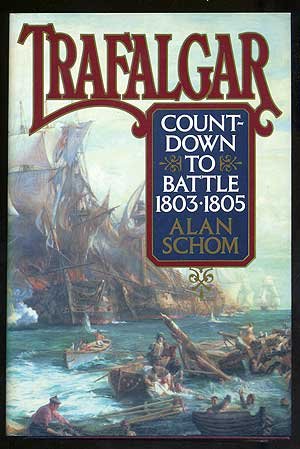
Trafalgar: Countdown to Battle 1803-1805 - Alan Schom


Title: Trafalgar: Countdown to Battle 1803-1805
Author: Alan Schom
ISBN: 9-780-7-18131-99-9
Publisher: Michael Joseph Publishing
Year: 1990
Hardcover
Pages: 421
Photos/Maps: 55/16

Trafalgar has achieved such a level of renown and legend that it still, 212 years after it occurred, resonates in the annals of British and Royal Navy history. Lord Nelson, the British Commander at the Battle, is still recognized as being one of the finest Naval Commanders in British history. Schom’s book acknowledges Trafalgar’s pride of place and the skill of Nelson and his crews in literally ‘securing’ the shores of England from invasion; however, his book goes much further than his and places the Battle within the larger context of the period and the events leading up to that fateful confrontation. This is critical in that it presents Trafalgar not as a standalone event, significant as it was, but as a logical conclusion (the Battle itself, not the outcome) of English and, more importantly, French policy from the period 1803 onwards.

The political battle of wills, both internally and externally, between the nations of England and France are traced with a clarity of understanding without being bogged down in excess detail. The importance of the ‘personality’ as opposed to solely the political acumen of the main players is made patently obvious. Schom’s explanation of the roles of Addington, Pitt, St Vincent, Cornwallis and a host of other secondary but nonetheless key English individuals, in the battle of wills with France, is fascinating as the reader begins to appreciate the pettiness, insight, vision and jealousies of the players and the expanse of the domestic, let alone international, wars that were raging at this time.

Conversely, the French are also analyzed with the same keen eye. The main difference in their case is the overwhelming role that Napoleon plays in the direction of the French Imperial (and by extension Spanish) policy towards England. What quickly becomes apparent in the French case, is the capacity for the entirety of the resources of the Empire to be focused towards the realization of the Emperor’s dream of crushing England. Schom also adroitly makes clear the challenges not readily apparent to a casual observer, that being the ability to build ships does not an effective Navy make. The loss of the cream of the French Naval Officers during the Revolution left France with a dearth of experienced and capable officers. This shortage, more than anything else, provided the French Navy with its Achilles Heel. That, and their arrogance and disdain for their Spanish allies.

Schom culminates his book with a detailed study of the Battle itself. It is clear that victory was never a sure thing for the English as the French and Spanish Captains and crews, for the most part fought, with a determination and ferocity never before witnessed by the British. For all of his shortcomings (and there were many) the Combined Fleet Admiral, Villeneuve, in the end led his fleet into battle. Indeed, the battle may have ended very differently were it not for the apparent cowardice of the French Rear-Admiral Dumanoir who commanded the lead division of 10 French and Spanish ships and who deliberately sailed past and away from the battle, despite being ordered to engage and within sight of French, Spanish and British ships in active combat, thereby reducing the Combined Fleet by almost a third.

Schom’s book is an excellent rendition and analysis of this period. It highlights the very real threat posed by Napoleon to England and the closeness with which she avoided invasion. The expanse of his narrative and the style with which he delivers his story is insightful, enlightening and captivating. His approach is very balanced and candidly reveals the strengths and flaws the main characters involved. This book is strongly recommended.