Showing posts with label Tactical Analysis. Show all posts

Thursday, 28 September 2023

The Planning and Preparations for the Battle of Kursk Vol 1 - Valeriy Zamulin (translated by Stuart Britton)

This review has been submitted to the Canadian Army Journal 

Title: The Planning and Preparations for the Battle of Kursk Vol 1
Author: Valeriy Zamulin (translated by Stuart Britton)
ISBN: 978-1-914059-22-3
Publisher: Helion and Company
Year: 2021
Softcover
Pages: 565
Photographs/maps: 36/7

Valeriy Zamulin's "The Planning and Preparations for the Battle of Kursk Vol 1" is a remarkable addition to the extensive literature on World War II. This meticulously researched and expertly crafted volume offers a comprehensive exploration of the planning and preparations that led up to one of the most pivotal battles in history, the Battle of Kursk.

Zamulin, a renowned Russian military historian, brings a wealth of knowledge and expertise to this project. He draws from an impressive array of primary sources, including German and Soviet archival materials, personal diaries, and interviews with veterans who participated in the battle. This exhaustive research allows him to present a multifaceted and nuanced perspective on the events leading up to the Battle of Kursk.

The book is organized into a clear and logical structure, which aids readers in navigating the complex historical context. Zamulin begins by setting the stage, describing the strategic situation on the Eastern Front in 1943. He highlights the German defeat at Stalingrad and the subsequent Soviet offensive, which put the Red Army on the offensive for the first time in the war. The first half of the book is focussed upon the German preparations, while the second concentrates on the Russian efforts. Each covers the same time period leading up to the Battle itself.

One of the strengths of Zamulin's work is his attention to detail. He meticulously examines the decisions made by both the German High Command, led by Field Marshal Erich von Manstein, and the Soviet High Command, headed by Marshal Georgy Zhukov. He dissects the strategic and tactical considerations that influenced their planning, providing readers with a deep understanding of the thought processes behind these critical decisions. Another stellar element of the book is its comprehensive exploration of the how, (relating to the methodologies), the adversaries planned their offense/defence.

Zamulin's analysis of the German preparations for the battle is particularly illuminating. He delves into the logistical challenges faced by the Wehrmacht, including shortages of tanks, fuel, and experienced personnel. This detailed examination challenges the traditional narrative that the Germans were on the brink of victory and reveals the vulnerabilities and limitations of the German war machine.

Equally important is Zamulin's exploration of the Soviet side of the equation. He sheds light on the extensive preparations undertaken by the Red Army, including the construction of elaborate defensive fortifications and the assembly of a formidable armored force. Zamulin's research dispels the myth that the Soviets relied solely on numerical superiority, demonstrating the sophistication of their planning and the effectiveness of their defensive measures.

One of the book's standout features is its focus on the human aspect of warfare. Zamulin weaves personal stories and firsthand accounts into his narrative, allowing readers to connect with the individuals who lived through this tumultuous period. These personal insights humanize the conflict, making it more relatable and emotionally resonant.

Furthermore, Zamulin's writing style is engaging and accessible. He avoids unnecessary jargon and provides clear explanations of military terminology and concepts. This approach makes the book accessible to both military history enthusiasts and general readers with an interest in World War II.

While Zamulin's research is comprehensive, it is worth noting that "The Planning and Preparations for the Battle of Kursk Vol 1" is just the first volume in a series. As such, the book primarily covers the period leading up to the battle and the initial stages of the conflict. Readers seeking a detailed analysis of the battle itself may need to turn to subsequent volumes in the series.

In conclusion, Valeriy Zamulin's "The Planning and Preparations for the Battle of Kursk Vol 1" is a masterful work of military history that offers a deep and nuanced examination of the events leading up to the Battle of Kursk. Zamulin's meticulous research, engaging writing style, and focus on the human element of warfare make this book a valuable addition to the library of anyone interested in World War II history. It challenges existing narratives and provides a fresh perspective on a pivotal moment in the conflict. As we await subsequent volumes in the series, Zamulin's work stands as a testament to the importance of understanding the planning and preparations that shaped the course of history on the Eastern Front.

Wednesday, 28 June 2023

Crecy: Battle of the Five Kings - Michael Livingston


This review has been submitted to Military History Online 

Title: Crecy: Battle of the Five Kings
Author: Michael Livingston
ISBN: 978-1-4728-4705-8
Publisher: Osprey
Year: 2022
Hardcover
Pages: 303
Phots/Maps: 33/5

In "Crecy: Battle of the Five Kings," author Michael Livingston takes readers on a gripping journey through one of the most pivotal battles in medieval history. With meticulous research and a captivating writing style, Livingston masterfully reconstructs the Battle of Crecy, providing a vivid and detailed account of the clash between the English and French forces.

Livingston's narrative begins by setting the stage, delving into the political and military backdrop of 14th-century Europe. He skillfully navigates through the complex web of alliances, rivalries, and ambitions that shaped the events leading up to the battle. The author's ability to blend historical context with the personal stories of key figures creates a rich tapestry that engages readers from the start.

The book truly shines in its depiction of the battle itself. Livingston's descriptions are immersive and evocative, capturing the chaos and brutality of medieval warfare. From the thunderous clash of armored knights to the whistling flight of arrows, the author skillfully brings the battlefield to life, allowing readers to experience the tension and fear that gripped both sides.

One of the standout aspects of "Crecy: Battle of the Five Kings" is Livingston's attention to detail. The author's extensive research is evident in his comprehensive understanding of the weapons, tactics, and strategies employed by the opposing forces. He seamlessly blends historical accounts, primary sources, and archaeological evidence to paint a complete picture of the battle. This meticulous approach not only adds depth to the narrative but also enhances the book's credibility as a reliable historical resource.

Moreover, Livingston's exploration of the individuals involved in the conflict adds a human element to the story. By focusing on key figures such as King Edward III of England, King Philip VI of France, and the iconic English longbowmen, he provides insights into their motivations, personalities, and the impact they had on the outcome of the battle. These character-driven narratives offer a compelling contrast to the grand scale of the conflict, creating a well-rounded and engaging reading experience.

While the book excels in many areas, it occasionally becomes bogged down by excessive detail. Certain passages delve into minutiae that may overwhelm readers seeking a more streamlined narrative. Nevertheless, this level of detail will undoubtedly be appreciated by history enthusiasts who crave a more thorough examination of the battle.

In terms of structure, "Crecy: Battle of the Five Kings" is well-organized and easy to follow. The author guides readers through the chronology of events, providing clear explanations and helpful maps to aid comprehension. Additionally, the book is supplemented with stunning illustrations, photographs, and diagrams that further enhance the reading experience and aid in visualizing the battlefield.

In conclusion, Michael Livingston's "Crecy: Battle of the Five Kings" is a remarkable work that combines meticulous research, immersive storytelling, and compelling characterizations. The book provides a comprehensive and engrossing account of the Battle of Crecy, shedding light on one of the most significant conflicts of the Middle Ages. Whether you are a history aficionado or simply seeking an enthralling tale of warfare, this book is sure to captivate and educate. Livingston's expertise and passion for the subject shine through, making "Crecy" an essential addition to any history enthusiast's library.


Tuesday, 16 May 2023

Bazaine 1870: Scapegoat for a Nation - Quintin Barry

This review has been submitted to the Journal of the Society for Army Historical Research 

Title: Bazaine 1870: Scapegoat for a Nation
Author: Quintin Barry
ISBN: 978-1-9133-3608-0
Publisher: Helion
Year: 2020
Hardcover
Pages: 308
Photos/Maps: 86/7

"Bazaine 1870" by Quintin Barry is an exceptional historical account that delves into the life and actions of Marshal François Achille Bazaine during the tumultuous year of 1870. Barry's meticulously researched and engagingly written book offers readers a comprehensive examination of Bazaine's role in the Franco-Prussian War and his subsequent surrender of the fortified city of Metz to the Prussian forces.

The book begins by providing readers with a thorough background of Bazaine's early life, military career, and his rise through the ranks of the French Army. Barry deftly sets the stage for the events that would eventually lead to the disastrous Franco-Prussian War. He explores the political and military landscape of the time, discussing the underlying tensions between France and Prussia and the strategic importance of Metz.

What sets Barry's book apart is his ability to present a balanced portrayal of Bazaine. The author does not shy away from showcasing Bazaine's strengths as a military commander, highlighting his tactical brilliance and successes in previous campaigns. However, Barry also critically examines Bazaine's flaws and poor decision-making during the war. He explores the controversies surrounding Bazaine's command, his questionable loyalty, and his controversial decision to retreat to Metz, effectively isolating himself and his army from the rest of France.

Barry's attention to detail is truly commendable. He masterfully captures the essence of the era, vividly describing the battles, the strategies employed by both sides, and the harsh conditions faced by the soldiers. By seamlessly integrating firsthand accounts and primary sources, the author brings the events of 1870 to life, making the reader feel as though they are witnessing the war firsthand.

The book's narrative flows smoothly, guiding readers through the chronology of events with clarity and coherence. Barry expertly balances historical analysis with engaging storytelling, making "Bazaine 1870" accessible to both scholars and general history enthusiasts. The author's clear prose and logical structure ensure that readers never feel overwhelmed by the wealth of information provided.

One of the strengths of "Bazaine 1870" lies in Barry's ability to challenge preconceived notions about Bazaine's actions. The author carefully evaluates the factors that influenced Bazaine's decisions, shedding light on the complexities of his character and the difficult choices he faced. This nuanced approach adds depth to the narrative and invites readers to reconsider their assumptions about this controversial historical figure.

While Bazaine himself is the focus of the authors narrative, the broader internal political machinations of French political and military adversaries undertaking internecine activities against Napoleon III and his government, are woven into the text by Barry to act as the backdrop of this tragic story. The role of Bazaine as pawn within this larger context underscores the bloodsport that represents politics at its most base level and the willingness of those to undertake Real Politique to sacrifice anyone to protect themselves and facilitate their quest for power.

In conclusion, "Bazaine 1870" by Quintin Barry is a remarkable work that offers readers a captivating and insightful examination of Marshal Bazaine and the events of the Franco-Prussian War. Barry's extensive research, balanced analysis, and engaging writing style make this book an essential addition to any history enthusiast's library. Whether one is familiar with this period or encountering it for the first time, "Bazaine 1870" provides a thought-provoking exploration of a pivotal moment in European history. It should also be recognized that the publisher of this work, Helion, has once again produced an outstandingly high quality book.


Wednesday, 1 April 2020

Rising Sun, Falling Skies - Jeffrey R Cox


This review has been submitted to Sabretache Journal.


Title: Rising Sun, Falling Skies
Author: Jeffrey R Cox
ISBN: 978-1-4728-1060-1
Publisher: Osprey Books
Year: 2015
Softcover
Pages: 487
Photos/Maps: 27/5

This book is the first installment of a multi-part series on the Pacific Naval War. It covers the five month period running from December, 1941 until April, 1942; a time when the Japanese Imperial Navy ran rampant over the Allies in the Far East. His narrative conveys, in quick, accessible and engaging prose, the tragic sets of events that led to the deaths of thousands of Allied sailors and airmen. Balanced against this is his evaluation of the overwhelming capability and expertise of the Japanese Imperial Navy and Naval Air Forces.

Cox covers the broad spectrum of regional actions, ranging seamlessly from the Philippines, Singapore and the Dutch East Indies to Australia. Presented in an eminently readable style, he conveys to the reader the terror, frustration and defiance of the Allied leadership and crews as they careened from engagement to engagement. The failure to effectively coordinate common doctrine and operational tactics between the various national actors, manifested itself in the ad hoc planning and execution of forays against the enemy. More often than not, this resulted in the degradation of the Allied fleets and aircraft through damage and loss.

Most significantly however, is Cox’s clear assertion that the true weakness in the Allied cause was not the ships or sailors themselves, but the National Governments and their senior respective leadership coordinating the battle space in the Far East. Failing to appreciate the consummate skill of the Japanese, nor their capabilities (such as the Long Lance torpedo), the Allied leadership, caught flat footed, was never able to regain the initiative and remained reactive to the Japanese onslaught. Further to this, Cox identifies deep national divisions between the senior leadership that manifested itself in a lack of trust amongst the operational crews for their senior commanders. Nevertheless, Cox’s research shows conclusively that the bravery and audacity with which the Allied crews faced their adversaries, even in the face of certain defeat, never wavered.

Cox also provides an in-depth analysis of the Japanese operations; their strengths and weaknesses and their conduct throughout the campaign. The Java Campaign definitely revealed a broad range of capabilities amongst the Japanese Commanders. Their ships were of the highest quality and the crews themselves trained to a peak level that would only degrade as the war progressed. The Japanese use of their Air Arm as a means of reconnaissance, attack (enabling their ships to standoff a safe distance), observing the fall of their shots (thereby overcoming the Allied use of smoke) and interdiction of Allied air forces was doctrinally far ahead of their adversaries. Cox is balanced in his analysis however, and is very critical of a number of the Japanese Commanders who showed themselves as mediocre at best. A good case in point was the ineptitude of Admiral Hara who managed to sink more of his own ships than did the Allies while defending the beachhead on Java.

Replete with anecdotes that show the best and worst of the combatants on both sides, Cox’s work is an excellent study of the early days of the Pacific War. Cox is an outstanding author with a real gift for developing a narrative that maintains the reader’s interest while still doing justice to the subject. 

Monday, 25 March 2019

The First Day on the Eastern Front - Craig WH Luther


This review has been submitted to War History Online Magazine.

Title: The First Day on the Eastern Front
Author: Craig WH Luther
ISBN: 978-0-811-73780-7
Publisher: Stackpole Books
Year: 2019
Hardcover
Pages: 471
Photos/Maps: 60/18

Much has been written about the German invasion of the Soviet Union, Operation Barbarossa, initiated 22 June, 1941; thus it was with some resignation that I undertook to read yet another missive on this campaign. To my great surprise and pleasure I found the work to be engrossing and easily one of the best books that I have read in recent times.

Luther has undertaken to present the reader with a comprehensive picture and an in-depth analysis of the events surrounding the first day of the invasion. He has succeeded in this endeavour magnificently. Drawing upon a vast array of primary source materials (war diaries, letters, combat reports) from both the German and Russian archives, he has crafted a book of extraordinary scope and detail.

He commences his work with a look at the planning and logistics efforts required to make Barbarossa a reality. He convincingly dispels the argument that the German attack was in fact a spoiling engagement against a Soviet intent to invade. Having said that however, there appears little doubt that Russia was building towards an ultimate clash with Germany as indicated by their military upgrading. The efficiency and capacity of the German logistics planning and execution is neatly captured, as an example of the scope of Luther’s research, by the fact that over 10,000 trains were coordinated in the move East of the German armies; all while maintaining the elements of surprise.

He then moves on to a discussion of each of the three main fronts (North, Central and Southern) as well as the Air Campaign waged the first day. In every case he seamlessly transitions between the various levels of command and adds colour to his narrative through the use of first hand material relevant to the point in question. While a majority of the discussion is focussed upon the German perspective, there is ample Soviet reference to provide for a balanced appreciation. Much of what the author has quoted will resonate with the reader, especially if they have had any military service. What stands out is the breathtaking scope and violence of the attack; the author’s use of letters, diaries and unit war diary entries inject a much more personal scope to his descriptions.

The author continually introduces elements of sober reflection into the narrative which add poignancy to the story. The impact of the attack on the Russian civilians who were caught in the maelstrom of the German attack, the ferocity of the Russian defence (as an example, the Luftwaffe lost 78 aircraft the first day, 15 of those due to ramming by Soviet aircraft), the awe inspiring opening salvo’s by the German artillery and the descent by both sides, almost immediately, into a level of brutality not witnessed on any other front serve as but a few examples.

The comprehensive bibliography and copious endnotes provide for extensive additional research and reading opportunities. Luther has included numerous maps which he refers to throughout the text. For the most part these are adequate although some are difficult to follow. Overall however, this is a superb book, full of new information that is indicative of the years of research that went into this work. An excellent reference and addition to anyone’s library.  

Monday, 10 December 2018

Morning Star, Midnight Sun - Jeffrey R Cox

This review submitted to Sabretache Magazine.

Title: Morning Star, Midnight Sun
Author: Jeffrey R Cox
ISBN: 978-1-4728-2638-1
Publisher: Osprey
Year: 2018
Softcover
Pages: 448
Maps:  4

There remains a common misperception that, following their defeat at Midway, that the tide of war had turned definitively against the Japanese and that their ultimate defeat was now inevitable. Jeffrey Cox’s work proves this to be categorically false. That they had suffered a major setback was indeed the case and recognized but the Japanese still viewed the war as winnable.

This was a particularly enjoyable book to read; not only for its detailed content and analysis, but also for the humour and style of the author. Interspersed with his discussion of the events of the period covered by the book, are ‘sidebar’ interpretations of reactions of commanders and participants. These cynical interjections add levity and, indeed, a more human element to the narrative. The traditional stoic demeanour of the Japanese are given a more realistic feel. The Allies, a more truthful reflection of the strains of multinational as well as inter-service operations. 

Cox balances his narrative extremely well between the protagonists. The reader is provided with fascinating insights into the effects of fog of war, opinions and expectations of individual Commanders and a deep understanding of the pressures of command and the cumulative effects of decisions. During this period, both the Allies and the Japanese commanders were under great pressure to achieve clear victories. While the Americans had defeated the Japanese at Midway, they had lost a carrier in the process resulting in an operational draw. The American public demanded greater success. Conversely, the Japanese commanders felt compelled to avenge the stain of their Midway losses. Compounding this pressure was the fact that neither side, at this time, had the depth of resources to compensate for any additional losses of capital ships.

The author effectively captures the complex interplay between the adversaries as they struggled to control the seas and skies over the centre of gravity during this period: Guadacanal Island. The Japanese proved conclusively that they remained more than a match for the American forces facing them. In fact, they held a majority of the cards in terms of surface vessels, command quality, operational options and control of the seas. Having trained exhaustively for night operations, the Japanese continued to rule the night with the Americans maintaining an advantage during the daylight. Two things had changed however that are not widely appreciated but are glaringly obvious in Cox’s analysis: the Americans had finally found an Admiral in Halsey that had the aggressiveness and presence to take the fight to the Japanese and the vaunted “Sea Eagles”, the Japanese carrier aviators that had ruled the skies up to now, had been decimated and were a fraction of their former numbers. The replacement pool was unable to replace the losses with similar quality aviators.

Cox has drafted an outstanding book of exceptional quality and content. His narrative style is engaging and keeps the reader hooked. His comprehensive knowledge of this period is reflected in his deep analysis of the strengths and weaknesses of the American and Japanese forces. Regardless of whether one is interested in naval operations in the Pacific Theatre, this book remains not only and excellent reference but also read.

Wednesday, 1 August 2018

1918: Winning the War, Losing the War - Matthias Strohn


This review has been submitted to the British Army Review.

Title: 1918: Winning the War, Losing the War
Author: Matthias Strohn
ISBN: 978-1-4728-2933-7
Publisher: Osprey
Year: 2018
Hardcover
Pages: 304
Maps:  8
Photos: 19

Those who have studied the First World War in any way will agree that the key front between victory or defeat was the Western Front. They will also agree that for the duration of the war, the Western Front, unlike the East and Southern Fronts, was static except for two brief periods: 1914 leading up to the Battle of the Marne and 1918 with the final offensives of the Germans and the subsequent Last 100 Days of the Allies. 1918, as its title implies, focuses upon the final year of the war, but not as an analysis of the movements and activities of the different protagonists; but as a discussion of the relative capabilities, the strengths, weaknesses and the influencing factors that reflected the different armies as they faced each other after 4 years of warfare.

This book draws upon the knowledge of a number of respected military historians, each well published and hailing from a variety of teaching institutions in Austria, Germany, the UK, the United States and Ireland. Each of the 10 contributors has been given a nation or subject to discuss (ie the Air Campaign, Naval Warfare, the British Army, the German Army etc) covering off all of the major facets of the war as it was in 1918. Each is a stand-alone analysis and may be read independent of the others. Austro-Hungary, Russia, the Ottomans and Italy are not covered as chapters but are lumped together in the sections: The Forgotten Fronts of Europe and the War Outside of Europe. This is unfortunate as certainly the three nations of Italy, Austro-Hungary and Turkey were still very active participants in their own right.

The chapters are drafted in a format similar in nature to a university lecture; not surprising given the backgrounds of the contributors. This also ensures that the content flows logically, is lucid and engaging. This improves both the quality of the reading experience as well as facilitating the knowledge that wishes to be passed.

The narrative of the book is bookended by an initial introductory chapter that places the impact of the final year of the War into a modern day context as well as a final installment that captures a number of the lessons to be gleaned from the results of the year’s events on the Western Front. On the German side, the campaigns of 1918 revealed a completely revamped operational and tactical engagement methodology based upon the ‘Stormtrooper’ infiltration tactics and vastly improved artillery utilization. It proved to be extremely effective at breaking the deadlock of trench warfare but could not be sustained due primarily to logistical limitations. On the Allied side, it was the lesson of interdependence between Allies. Up to that point in the war, nations had worked together but retained their operational independence. The crisis of the German offensives set the conditions on the Allied side for the appointment of a senior commander for all Allied armies, something that was never achieved amongst the Central Powers; this in turn significantly improved the Entente’s operational effectiveness and focus.

Overall, 1918 is an excellent analysis of the final year of the war, drawing upon the expertise of a number of different subject matter experts. The analysis is clear, concise and in-depth; it is unfortunate that Austro-Hungary and Turkey do not have their own chapters but they are not ignored. The conclusion is comprehensive and draws attention to a series of lessons that still resonate a century later. It is clear, from the discussion, that the war was still very much undecided as the protagonists entered the summer of 1918 and could easily have had very different results given just a few changes. A book well worth reading and discussing.

Friday, 15 September 2017

The Sword Behind the Shield - Norbert Szamveber

This review has been submitted to Strategy and Tactics magazine.

Title: The Sword Behind the Shield
Author: Norbert Szamveber
ISBN: 978-1-909982-19-2
Publisher: Helion
Year: 2015
Hardcover
Pages: 491
Photos/ Maps: 0/16

In early 1945 the world’s attention was focused on the tightening vice on Berlin as the US and British drove in from the west and the Soviets from the East, relatively little attention was given to the fighting in the southeastern region around the besieged Hungarian capital of Budapest. It was in this region that, in an effort to both relieve the garrison as well as keep Hungary in the war, that the Germans (with Hungarian forces) launched a series of operations dubbed Konrad I, II, III. Ultimately they proved to be unsuccessful at relieving Budapest but not for operational or tactical reasons; it was the strategic decisions made in Berlin that ultimately undermined the ability of the Axis to succeed. While the Axis came close to succeeding, the direction that the garrison was not to attempt a breakout to meet up with the relief efforts as well as Soviet pressure in the direction of Berlin that resulting in forces being withdrawn that ultimately prevented operational success.

It is the attention that the book brings to the continued operational effectiveness of the German forces even as late as February, 1945 that stands as one of the most interesting aspects of the narrative. The German ability to continue to plan and execute combined operations effectively is underscored, as an example, by the fact that the Luftwaffe and Hungarian air force was flying up to 455 sorties per day in ground attack and air interdiction operations in support of Konrad. This at a time when it was assumed that the Luftwaffe was a spent force. Szamveber shows through his use of combat reports and other primary source material that, despite logistical as well as material shortages that the Axis were able to execute deep penetration operations against the opposing Soviet forces.

He balances his narrative very effectively by analyzing Soviet capabilities and efforts to block the German advances. The Soviet forces continue to prove themselves masters at the art of battlefield camouflage as well as the use of prepared defensive positions (anti-tanks nests had multiple overlapping weapon systems for example). The author notes that the Germans still felt themselves to be more than equal to the Russians in weaponry and operational/tactical skill sets but that there was a definite improvement in the Soviet capability at the junior and senior officer level; the mid-level officers still were a weakness. Also, it is interesting to see that the Soviets were also suffering significant challenges as the quality of their infantry was markedly lower as the war progressed; a result, no doubt, of the appalling casualties of the previous three years.


Szamveber’s work is an outstanding operational and tactical analysis of the German efforts outside of Budapest and the Soviets determination to thwart them. A detailed map section helps to visualize the operations (although a separate map book would have been better). The author has provide detailed summaries of tables of equipment and casualty rates to show the deltas under which the units were operating. This is a book for the reader with an eye for operational and tactical detail. Helion continues to provide outstanding quality in its book production. 

Wednesday, 28 December 2016

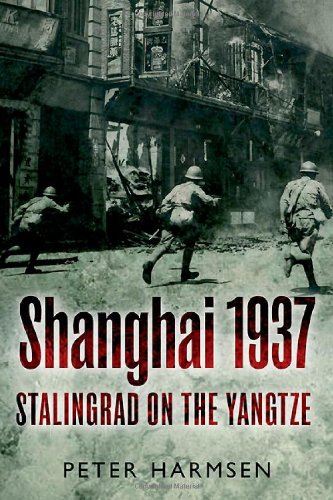
Shanghai 1937: Stalingrad on the Yangtze - Peter Harmsen

This review has been submitted to Sabretache Magazine. 

Title: Shanghai 1937: Stalingrad on the Yangtze
Author: Peter Harmsen
ISBN: 978-1-61200-167-8
Publisher: Casemate
Year: 2015
Hardcover
Pages: 310
Photos/Maps: 76/9

The war between Japan and the Chinese has to a great extent been eclipsed by the world conflict in Europe and the Pacific. Nevertheless, the fighting between the two Asian powers was catastrophic to the people of China and a clear precursor to the style of warfare that Japan would undertake in the near future throughout the Pacific. Harmsen’s work on the fighting in Shanghai, a city steeped in intrigue and an international hub, sheds a disturbing and fascinating light onto the nature and dynamic of Far Eastern conflict.

His writing style is easy to follow and encapsulates the strategic and operational focus of operations as well as the experiences of the individual soldiers and officers on each side. He astutely analyzes the doctrinal challenges and strengths of the opposing armies and the role that the international community played as the battle unfolded. Specifically, the role of the German army advisors to the Chinese military is discussed in some detail, shedding light on the challenges and frustrations associated with those working in an advisory capacity.

Additionally, Harmsen discusses the weaknesses of the Japanese and Chinese armies and their slavish adherence to orders and doctrine. Initiative was not a strength that was promoted and this resulted in significant loss of personal and missed opportunity; this was further exacerbated by the nature of the command structure of these armies. The adherence to national doctrine also resulted in each army being able to anticipate exactly how their adversary was going to respond or react to a given situation further aggravating losses.

This weakness was offset by a deep belief in their causes amongst the soldiers. This strength of character of the individual soldiers manifested itself in their incredible ability to overcome adversity and horrific conditions. Despite poor logistics and medical support (and its resultant deprivations), the fighting men on each side continued to undertake operations in horrendous environments, in the full knowledge that surrender or capture by either side was not an option.

Another noteworthy aspect of this work is the study of the lack of empathy and humanity shown by each side in the conduct of operations. Specifically on the Japanese side, this willingness to treat both uniformed adversaries and civilians to the most terrible of atrocities (regardless of their involvement or age) reveals not only a precursor to future behaviours but a weakness in both command and an understanding of the nature of winning the hearts and minds of subdued populations.


Casemate’s publication is of excellent quality with a slightly larger font for easy reading. A comprehensive bibliography and notes section add depth and dimension to the narrative. Harmsen’s book is balanced and very readable; he has ensured a human face to the tragedy that was this battle. There is much to be learned by this insightful work; not the least of which is an appreciation of the psyche of the Chinese and Japanese soldier.

Thursday, 11 August 2016

The Viaz'ma Catastrophe - Lev Lopukhovsky


This review was submitted to the Global War Studies Journal

Title: The Viaz'ma Catastrophe
Author: Lev Lopukhovsky
ISBN: 978-1-908-91650-1
Hardcover
Pages: 576
Illustrations:  21 B/W, 15 maps
Publisher: Helion Publishing

1941 the armed forces of the USSR were on their heels. Pushed back to the approaches to Moscow they continued to fight a tenacious and increasingly desperate rearguard action against the cream of the German Wehrmacht. Drawing upon seemingly endless resources of men (and material) the Soviets strove to crush the German advance through a series of Army level counterattacks. The Wehrmacht, for their part, continued their grand enveloping maneuvers, encircling and crushing the Russian forces in their path. The Battle of Viaz’ma and Orel-Briansk represented for the Germans what they assumed to be the final barrier to their final advance on Moscow. Between these two battles of encirclement over the first three weeks of October, 1941 the Russians lost between 900,000 and 960,000 men; a crushing defeat by any standard.

​Lopukhovsky is another of the new wave of Russian historians who have taken advantage of the relaxation of the archival access laws in order to draw upon primary source material from the Russian/Soviet perspective. Commencing with a detailed synopsis of the events leading up to the commencement of Operation Typhoon (the final German drive on Moscow), the author provides the reader with a comprehensive baseline of the situation facing the Soviets. This is one of the few histories of this battle written in the post-Soviet era, from the perspective of the Russians. The level of detail is staggering and the accompanying maps and tables add a degree of clarity rarely enjoyed in a book of this complexity. Stuart Britton who has undertaken the translation of this book from its original Russian is to be commended for another outstanding endeavor.

​The author identifies key themes relating to the Soviet performance:

1. The reluctance on the part of senior commanders to both provide and accept factual information thereby undermining decision making and situational awareness;
2. the ferocity and tenacity with which the Soviet soldier defended their positions against overwhelming German superiority; and
3. the reluctance of Soviet commanders to make and take responsibility for decisions.

Additionally, he author interjects into his narrative with personal observations relating to his efforts to clarify questions with the senior Soviet commanders in the postwar Soviet era. It is fascinating the degree to which these efforts were met with official roadblocks whenever any 'questionable' positions were challenged. Notwithstanding this fact, it is also interesting how, despite the position officially of the State, candid ex-senior commanders were willing to be in correspondence with the author.   

Overall, an outstanding book and a highly recommended addition to those seeking to expand their understanding of the challenges that the Soviet's struggled with in trying to contain the German Typhoon of 1941. It is a sobering and humbling rendition of the sacrifice of the Russian soldier and the dysfunction of their leadership.

Friday, 5 August 2016

Scout’s Out - Robert Edwards

Tiitle: Scout’s Out
Author: Robert Edwards
Publisher: Stackpole Casemate
ISBN: 978-0-8117-1311-5
Hardcover
Year: 2013
Pages:
Photo’s: 500+ b/w

Robert Edwards has produced a broad-ranging synopsis of the German reconnaissance force of the Second World War. Knowledge, as any one will confirm, is power and the faster that it can be attained the more effectively it may be used to disrupt or undermine the plans of the enemy.  The German Army recognized the critical importance of this and placed special emphasis on the development of equipment and training to facilitate this area of expertise.

Scout’s Out starts with a history of the German Recce forces and their re-establishment during the interwar period. The reader is not only introduced to the methodology surrounding the doctrinal development of this element but also the iterations that the recce unit structure underwent as it developed. This is important because it shows how the Germans adapted their forces to meet not only the changing nature of their operational environment but also to accommodate the lessons learned as the war progressed.

The author spends a significant amount of the book discussing the equipment that the soldiers used to undertake their tasks. Again, one sees the significant amount of innovation and adaptability that the German forces used to increase their effectiveness. Certainly, the reader is left with a very high impression of the quality of German equipment. Included are colour templates of the different recce vehicles use throughout the war.

The book also discusses at length the operational history of the various Recce Units of the German Armoured Forces. As a reference and synopsis this is very useful. The book represents an excellent history and reference for these forces. The author is himself a retired Armoured Officer and brings a critical and knowledgeable eye to the subject.

This book represents an overview of these forces. It is not a combat history of any one unit but a comprehensive guide to the development, equipment tables, structure and rogue’s gallery of the units that undertook this vital task. Recce has always been a more independent arm of any armoured force with a fierce pride and professionalism. Edwards brings this out in his work. Replete with hundreds of photographs, a very high level of quality in the publication of the book, a clear and concise analysis of all aspects of the recce specialty; Edwards’ book is well worth the money and time to read and enjoy.

Monday, 13 June 2016

ISIS: Inside the Army of Terror - Michael Weiss, Hassan Hassan

Title: ISIS: Inside the Army of Terror
Author: Michael Weiss, Hassan Hassan
ISBN: 978-1-6824-5029-1
Publisher: Regan Arts Publishing
Year: 2016
Softcover
Pages: 411
Photos/Maps: 0

As the war against terror expands beyond the borders of Iraq and Syria, it is increasingly more important to understand not only the nature of the conflict that the world is facing, but also the history of the organizations that comprise our adversaries. Too often we perceive the fundamental Islamacists as a solid entity when in fact they are comprised of not only multiple facets, often with tenuous (at best) alliances, but also varying priorities and goals. It is in this aspect that the author’s book carries its greatest benefit. Weiss and Hassan do not suggest means of combatting the varying organizations that make up ISIL but they do provide invaluable analysis of its history, development and composition.

It is a very convoluted and complex path that ISIS has taken; with many actors and influences. The authors have done a noteworthy job of tracing this route and providing the depth and breadth of scrutiny in order for the reader to grasp the history and goals of this organizations. One of the key takeaways is the sheer number of players engaged in this fight. Additionally, their ability to quickly morph and adjust their operating procedures to meet the changing battlespace is striking. It is interesting; however, that one of their strengths also represents one of their greatest weaknesses; that of building a Caliphate.

When Al-Qaeda and ISIS were operating as asymmetric terror groups within the societies that they wished to control, it was very difficult for the governments to directly challenge them due to the fluidity and flexibility of their modus operendi. However, these groups were also hampered by this approach due to the fact that they remained on the periphery of rule. By establishing a caliphate with its fixed responsibilities and tasks, they were able to more formally impose their brand of theocratic rule upon the population. However, this in turn, meant that they no longer could rely upon the camouflage of the population and were now much easier to engage.

This book does not limit itself to a study solely of the Army of ISIS but incorporates the broader scope of the regional and international influences and goals. Players such as Syria, destabilized by internal revolution from a number of fronts, is suggested as clandestinely supporting ISIS operations within its borders in order to garner international sympathy and support. Iran is shown to be vigorously expanding its regional influence and control through its active and ‘passive’ support to not only the incumbent Iraq government but also the Syrian regime. A myriad of others such as the Free Syrian Army, Al-Nusra, Russia, the US, the Kurds and the Iraqi government all play host to the mosaic of individual interests at play.


The book is, for the most part, well balanced. The authors show their bias at times in their criticism of the role that Assad, the Syrian leader. While his activities are without question, brutal, they must be seen in light of his efforts to retain power within a ‘real politique’ context. The book reads very well and does an admirable job at unraveling the Gordian Knot of ISIS and the region. It is worth reading in order to gain a better appreciation of the nature of the region, the adversaries and the goals within this conflict.

Thursday, 31 December 2015

Barbarossa Unleashed - Craig W H Luther

This review has been submitted to the Journal of the RCAF

Title: Barbarossa Unleashed
Author: Craig W H Luther
ISBN: 978-0-7643-4376-6
Publisher: Schiffer
Year: 2013
Hardcover
Pages: 712
Photographs/maps: 185/23 handout

The number of books written about the German invasion of the Soviet Union on 22 June, 1941 is legion. Thus it is that in order to stand out, a book must have some aspect of it that makes it unique  from the others; Luther's book has two. The first focuses upon the build-up to Barbarossa; not just the political and operational planning - that has been well covered - but the logistical detail and execution. Secondly, he limits (and I use the term loosely given the detail of the book) his narrative to the operations of Army Group Centre and its drive on Moscow. This narrowing of the scope of Luther's book highlights for the reader the immense challenges associated with Barbarossa and, most importantly from a learning perspective, what was done well by both the Soviet's and Germans and what was not.

Logistics is not an exciting field of military operations and planning and many of the histories of Barbarossa, while acknowledging it, pay only a cursory nod to the critical role that it played as well as the amount of work it took to execute as well as plan effectively. Luther does not do this; dedicating a full quarter of his work to the German planning, pre-deployment and deployment phases of the operation. The sheer numbers and complexity of the buildup and movement of the forces involved (for Army Group Centre alone) is staggering: well over 127,000 tons of ammunition, 52,000 tons of fuel, 45,800 tons of rations (these values equated to 20 days of supply only), millions of men and horses, vehicles and equipment from across Europe, in secret, to staging areas along the Soviet/German border. The movement tables for the railway system show hundreds of trains flowing the resources east; a five phased operation over a period February to June and entailing over 220 trains per day at its peak. Luther has done an excellent job highlighting this phenomenal success and providing an appreciation of the scope, distance and complexity of this undertaking.

He also goes beyond simply the reiteration of fact and provides the reader with an analysis of why the Germans arrived at the planning assumptions that they did and how that ultimately affected the outcome of the operation. He draws clear and concise lines of evaluation between a decision at the planning stage and its trickle down effect through the operational and tactical levels of execution. He also emphasizes the flexibility of the German support system with his discussion of the last minute decision to move 8 Air Corps across the lines of deployment. This decision to change the operational area of this massive organization (over 8000 vehicles alone) had the potential to derail the entire eastern deployment; that it did not was testament to the capability of the German logistics system.

Luther has drawn upon an extensive series of sources from both the Soviet and German archives as well as a massive amount of secondary sources. Each chapter is provided with its own end-notes thereby facilitating quick and timely review by the reader. As he transitions from the build-up to the execution phase of the campaign it is interesting that he maintains the balance between the frontline operations, the growing logistical challenges and the impact of the continued dysfunction between the strategic priorities of Hitler and those of OKW. His writing style seamlessly flows between these aspects and he brings a critical eye to his  evaluation of the impacts of these challenges.

His focus is upon the German onslaught to the gates of Moscow but he does incorporate into his study an analysis of the strengths and weakness of the Soviet military and its operational capacities. In doing so he provides a clear control line for the reader in terms of an evaluation of the capabilities of the adversaries.

The book itself is a very healthy tome. Included with it are a series of operational maps (in German) of the various periods leading up to the December battles outside of Moscow. The production value of the book is high and the text easily readable.

Luther has written a comprehensive and deeply analytical study of the lead up, launch and task execution of Army Group Centre in the monumental Barbarossa operation. This could be a very dry and dusty recitation of statistics and movements; however, he avoids this through a dynamic and engaging style that incorporates both an operational canvas and personal facets for the soldiers involved. His review of the logistics challenges married with the flawed intelligence and planning assumptions and evaluations go far in explaining how and why the Germans reached the zenith of their offensive capability literally at the gates of Moscow. Highly recommended as a an addition to any library on the Second World War. 


Thursday, 3 December 2015

Green Leader Operation Gatling - Ian Pringle

This review submitted to the British Army Review.

Title: Green Leader Operation Gatling
Author: Ian Pringle
ISBN: 978-1-909982-93-2
Publisher: Helion
Year: 2015
Hardcover
Pages: 242
Photographs/maps: 37 b/w//31 colour/7

Operation Gatling was the operation name for the Rhodesian government’s response to the shooting down in September, 1978 of an unarmed civilian Rhodesian Air Viscount by a Strela heat-seeking missile fired by a team of Joshua Nkomo’s Zimbabwe African People’s Union (ZAPU) fighters within Rhodesian airspace. They had infiltrated from bases within Zambia and, following the crash in which 18 passengers and crew survived from the 52 on board, an insurgent ZAPU group came across the crash site and proceeded to machine gun 10 of the survivors (the remaining 8 survived by hiding in the bush). This one act had profound repercussions for not only the Rhodesian people but also the fortunes of ZAPU and Nkomo.

Pringle's book is divided into two distinct parts, the first outlines the circumstances of the Viscount shoot down, the international environment within which Rhodesia found itself and a synopsis of the historical relations between Rhodesia and the world community. The second focusses on the conception, planning and audacious execution of the Rhodesian military’s combined arms operation against Nkomo and ZAPU within the sovereign territory of Zambia (including the internationally famous Green Leader transmission to Lusaka tower).

Notwithstanding the tragic rendition of the plight of the survivors, the main takeaway in the first section of the book was the lukewarm reaction of the international community to the attack on Rhodesian civilians. The fact the Nkomo was welcomed into England and overtly admitted his organizations complicity during an interview with the BBC with no ramifications is clear evidence of the attitude of the period and the environment within which Rhodesian operational decisions were reached.

There are a number of lessons that arise from the second portion narrative and the (overall) success of this mission. First among these is the critical necessity of joint operations. Rhodesia had developed an extremely effective doctrine called Fireforce which facilitated seamless inter-arm cooperation between air, ground and logistics forces. This jointness, arrived at well before many of its international contemporaries, resulted from both its unique operating environment as well as economic and political isolation. 

Secondly, the complexity of the operation from a planning and execution perspective and the extremely narrow margins for error was testament to the degree of expertise that Rhodesian forces had achieved. This speaks to the high level of training and inter service confidence that the various arms developed and maintained. Further evidence of this professionalism was the lack of micro-management from senior staff and government officials. This was critical to mission success as it pushed decision making authorization to the onsite commander thereby ensuring both timeliness and efficiency of command and control (C2). The uncontrovertible requirement for training and maintenance of skill sets prior to need is evident in these pages; like insurance, it is too late to garner it after the need arises.   

Pringle has once again drafted a book that clearly lays out the operational environment (social, international and economic) succinctly and accurately. His assessment of the skills of the Rhodesian military, its weapons innovation (alpha and golf bombs), doctrinal innovation (Fireforce) and command climate reinforces the adaptability of the Rhodesians and clearly identifies it as a standard to be emulated. Pringle's writing style is engaging and fluid and Helion, has published a very high quality book. Rhodesian operations have much to pass on to the modern asymmetric operator for planning, audacity and daring and I strongly recommend this book for both the military and civilian components of any modern military.

Saturday, 21 November 2015

The First Battle of the First World War: Alsace - Lorraine - Karl Deuringer edited by Terence Zuber

This review has been submitted to the British Military History Journal.

Title: The First Battle of the First World War: Alsace - Lorraine
Author: Karl Deuringer
ISBN: 978-0-75246-086-4
Publisher: Trafalgar Press
Year: 2014
Hardcover
Pages: 398
Photos/Maps: 0/38

The original book by this name was drafted by Karl Deuringer in 1929 as part of an effort to capture for posterity the role of the Bavarian Army in the First World War. The Battle of Alsace-Lorraine was unique in that it not only represented the first significant combat of the war, but also the first and only time that the Bavarian Army fought together under a single unified command. In its original form it was over 893 pages with 74 maps; to reproduce a modern copy of this would be impossible and so it was edited and translated by Terence Zuber into a more manageable form and length. In doing so, Zuber has maintained both the flavour and the intent of the author's original work.

It is important to realize at the outset that this book represents a tactical analysis of the first month of the war running between 11 Aug to 14 September, 1914. Dueringer provides a brief introduction outlining the strategic plan within which the Bavarian's (designated the German 6th Army) undertook their tasks. Specifically, they were to pin in place as many French soldiers as possible while upholding the German left flank in the region of Alsace-Lorraine. All of their subsequent actions focused on achieving Moltke's (the German overall commander) Commander's Intent.

The detail associated with the narrative is more than impressive. It is extremely detailed and really does require the provided maps in order to accurately follow the convoluted movements of the units involved. There are however, numerous maps included that are reproductions of the originals from Deuringer's 1929 work. These included maps are referenced to in the narrative and, while beneficial are somewhat hard to follow. There are an additional nine large situational maps and thirty regional maps (some in colour) which may be accessed online; however, it is necessary to join The History Press newsletter in order to access. They are, nevertheless, very helpful.

Zuber's translation is excellent and the degree of detail provided by Deuringer is both outstanding and daunting; the book is not for the faint of heart. It is extremely easy to get lost in the myriad of minor movements described. The operational unit of discussion is as small as platoon and company level and so maintenance of the big picture is easily lost. This is done deliberately and as long as the reader is aware before they dive in, it does not detract from the overall impact of the book. Deuringer also acknowledges that the sources used for the book are predominantly from the Bavarian side, as few if any records were kept by the French and the acquisition of personal notes and diaries was extremely difficult.

Despite the detailed style of writing there are significant numbers of lessons to be gleaned especially for those armies experiencing combat operations after a significant period of peace (keep in mind that the German and French armies had not been involved in large scale combat since 1871). Challenges relating to effective movements, resupply, fatigue and the fog of combat are all readily evident. The importance of physical fitness, realistic training, dynamic leadership at the lowest level and effective planning also become obvious. Dueringer weaves these lessons extremely well into his narrative, thus it serves as both a testament to the capability and success of the Bavarian Army but also a treatise on the importance of preparation, training and doctrine. 

This book is of great value although the reader must work for it more so than in other books that I have reviewed. The style is dry and detailed but fascinating to those willing to make the effort. Unlike many other historical renditions of battles, is is easier to visualize and appreciate the terrain and environment when the focus is so narrow. Unfortunately, there is no bibliography included however, there is a short notes section that provides some additional reading recommendations. Overall, I would recommend this book with the one reservation that it is not a quick read and does demand attention in order to get the most out of it.